Vienna, VA HVAC UV Lights: What Size for Indoor Air Quality?
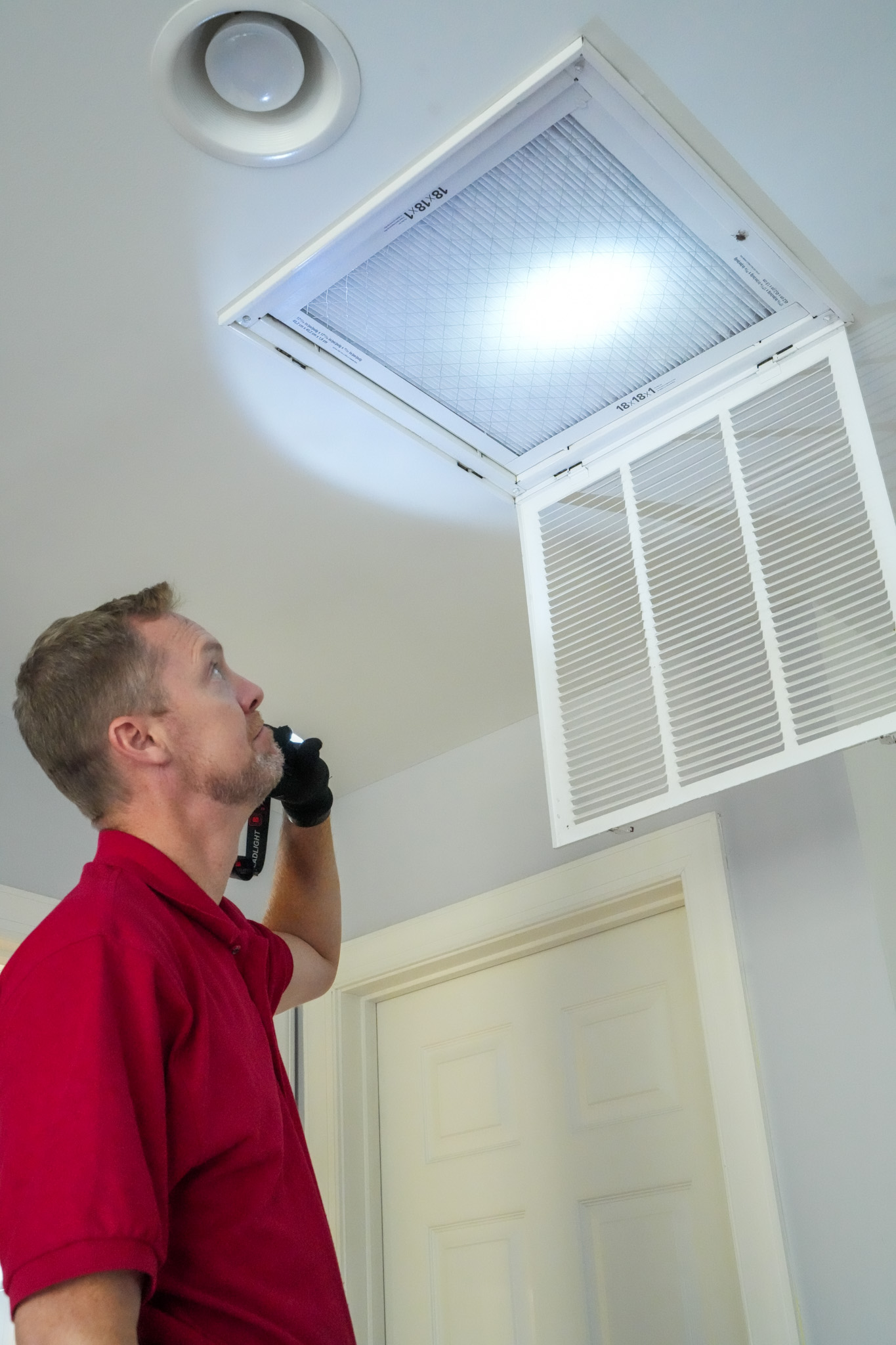
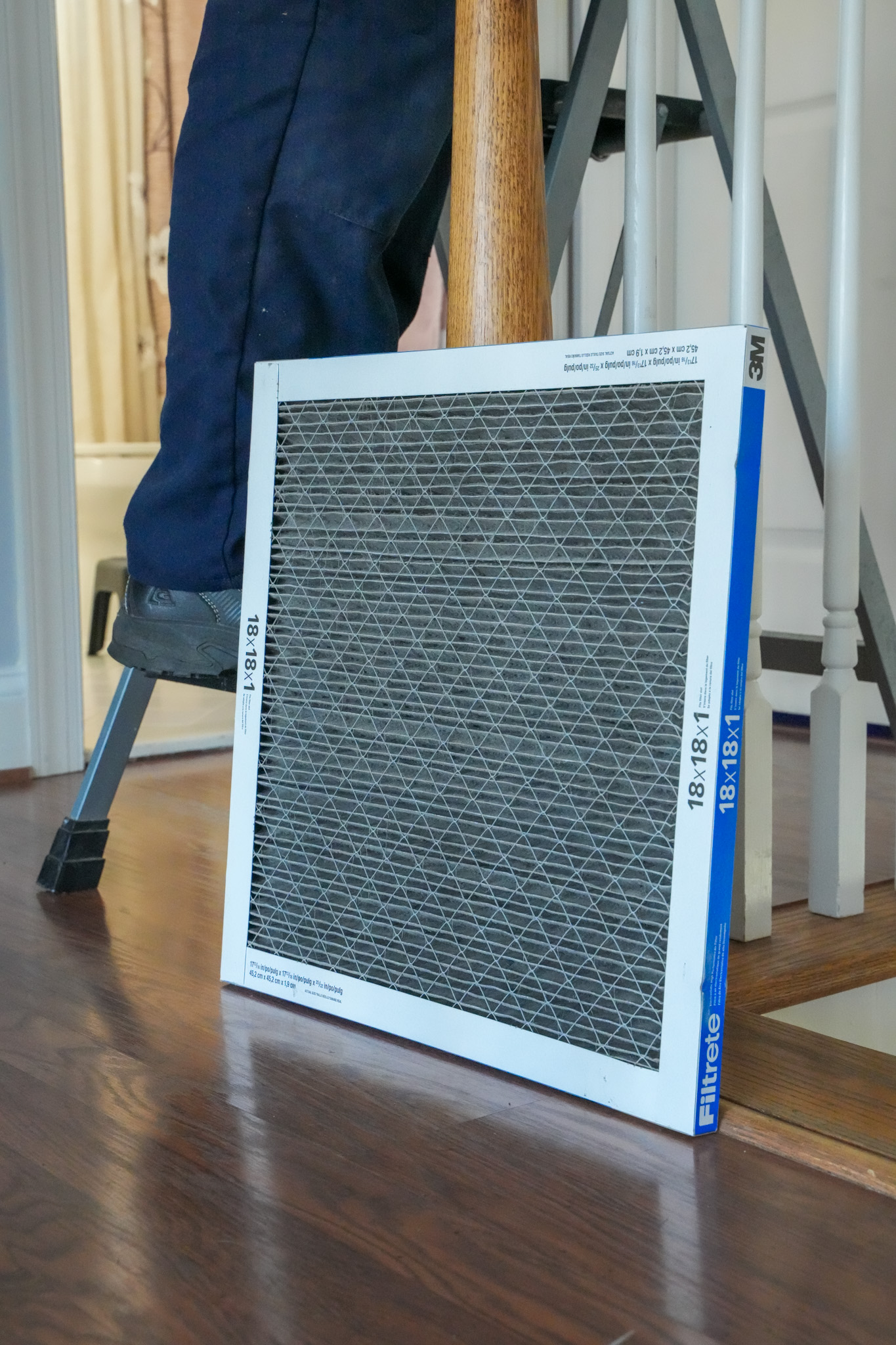
If you’re weighing HVAC UV lights for cleaner air, the big question is what size actually works. Homeowners in Vienna, VA ask this because the right UV-C setup can cut biofilm on coils and improve indoor air quality without guesswork. Below, we explain how to size HVAC UV lights the right way, when to use coil UVGI vs airstream UVGI, and how filters and humidity control fit in. Use our $100 humidifier coupon inside.
How UV-C Lights Improve Indoor Air Quality in HVAC Systems
UV-C light targets microorganisms that thrive on evaporator coils and inside air handlers. When sized and placed correctly, it disrupts growth that can add odors, allergens, and airflow resistance. Two common approaches are coil irradiation (UVGI at the coil) and airstream disinfection (UVGI in the duct). Both rely on dose, which is intensity times exposure time, to be effective without chemicals.
UV-C used in HVAC is in the germicidal range. Most whole-home products use lamps tuned near 254 nanometers to inactivate microbes. The result you notice is cleaner coils, steadier airflow, and air that smells fresher. The key is matching lamp power, number of lamps, and placement to your equipment and goals.
Coil UVGI vs Airstream UVGI: Which Are You Sizing?
There are two distinct use cases and you size them differently.
-
Coil UVGI
- Goal: Keep the evaporator coil, drain pan, and nearby surfaces free of biofilm.
- Sizing focus: Uniform surface coverage and continuous exposure. Lamp power matters, but so does clear line of sight to the coil face and pan.
- Payoff: Better airflow and efficiency, fewer odors, and less microbial growth that can shed into air.
-
Airstream UVGI (in-duct)
- Goal: Inactivate airborne microorganisms as air moves past the lamps.
- Sizing focus: Airflow rate (CFM), duct dimensions, lamp quantity, and exposure time. Higher airflow needs higher total lamp output or multiple lamps in series.
- Payoff: Added reduction of airborne microbes when paired with strong filtration.
If your main concern is musty odors, coil UVGI is usually the first, most cost-effective step. If you want an extra layer against airborne contaminants, airstream UVGI is the add-on.
Sizing HVAC UV Lights in Vienna, VA: What Matters Most
Vienna homes see humid summers and heavy spring pollen. That humidity feeds coil biofilm, so coil UVGI often delivers fast, visible results.
Key sizing inputs your technician will verify:
- Equipment tonnage and coil geometry. Taller, deeper coils need more lamp length or additional lamps for full coverage.
- Duct size and airflow (CFM). Higher CFM reduces exposure time and calls for more lamp output in airstream UVGI.
- Target outcome. Odor control and coil cleanliness point to coil UVGI. Airborne reduction points to airstream UVGI plus high-performance filtration.
- Access and reflectivity. Shiny, clean interiors reflect UV-C and boost dose. Dust and obstruction reduce it.
A good design matches lamp count, lamp wattage, and placement to your coil face area or duct cross section, then confirms results at maintenance visits.
Lamp Power, Quantity, and Placement
Think in terms of coverage and dose.
- Coil UVGI: Place one or more UV-C lamps to illuminate the entire coil face and drain pan. Lamps should sit close enough for strong intensity but far enough to avoid contact. For large “A” coils or stacked coils, using two lamps on opposite sides often eliminates dead zones.
- Airstream UVGI: Align lamps parallel to airflow and span the duct width to minimize shadows. Long ducts with high CFM often need multiple lamps staged in the direction of airflow to increase exposure time.
- Ballasts and mounting: Use corrosion-resistant hardware and properly rated ballasts. Keep wiring clear of condensation and service panels.
Maintenance matters. UV output drops over time, so plan annual lamp replacement at a minimum or follow the manufacturer’s hour rating.
Call to size it right the first time: Parrish Services at (571)-650-1016 or visit https://www.parrishservices.com/. Ask about our $100 Off Humidifier Install coupon if dry winter air is also on your list.
Airflow, CFM, and Contact Time Basics
Airstream UVGI performance depends on how long air is exposed to UV-C and how intense that light is.
- Airflow rate: As CFM increases, exposure time drops. To maintain dose, add lamp power, add lamps in series, or reduce air velocity near the lamps with proper placement.
- Duct geometry: Wider ducts may require longer lamps or multiple lamps across the width. Bends and obstructions can create shadows that need extra coverage.
- Recirculation: In homes, air passes the lamps many times per day. Even if single-pass dose is moderate, total reduction improves with each pass, especially with good filtration.
Sizing is about balancing these factors so the real-world dose meets your goals without over-lighting.
UV with Filters and Humidity Control in Fairfax County Homes
UV-C is powerful, but it is not a filter. For best indoor air quality, combine it with:
- HEPA or high-MERV filtration: HEPA can capture up to 99.9% of very small particles. High MERV filters increase capture of fine dust and allergens. MPR is another rating that helps compare filter performance.
- Balanced humidity: Keep indoor relative humidity around the 40 to 60 percent sweet spot to limit mold and improve comfort. Whole-home humidifiers and dehumidifiers integrate with HVAC to maintain balance.
- Preventive maintenance: Clean coils, clear condensate lines, and sealed ducts keep systems efficient and IAQ stable.
Here in Vienna and greater Fairfax County, pollen and summer moisture make this combined strategy especially effective.
Safety, Materials, and Maintenance for UV Systems
Safety is built into proper design.
- Shielding and access: UV-C should not shine into occupied spaces. Install lamps inside sealed equipment with interlocks or service panels that block light.
- Materials: Prolonged UV-C can degrade some plastics and wire insulation. Quality kits specify UV-resistant parts and recommended clearances.
- Ozone: Choose non-ozone-producing UV-C systems designed for HVAC use.
- Service: Replace lamps on schedule, wipe lenses during tune-ups, and verify coil cleanliness. Cloud-based records in our Priority Maintenance Plans keep lamp dates and service notes in one place.
When to Step Up to HEPA, Air Cleaners, or Add-On UVGI
Consider an upgrade when any of these apply:
- Allergy or asthma attacks coincide with HVAC runtime.
- Persistent musty odors even after coil cleaning.
- Visible microbial growth on coils or in the drain pan between cleanings.
- High indoor particle counts from pets, cooking, or wildfire smoke.
Options we install and service:
- Whole-home air cleaners and electronic filters for high efficiency capture.
- HEPA air purifiers for ultra-fine particles.
- Ultraviolet air purifiers for coil or airstream targets.
- Whole-home humidifiers and dehumidifiers for steady 40 to 60 percent RH.
How Parrish Sizes and Verifies Your UV-C Installation in Vienna
Our process keeps guesswork out of the equation:
- Inspect coil type, tonnage, blower settings, and duct dimensions.
- Measure static pressure and confirm CFM targets.
- Recommend coil UVGI, airstream UVGI, or both based on your goals.
- Specify lamp length, count, and placement for full coverage.
- Integrate with your existing HVAC, then test and calibrate.
- Document lamp install dates and create reminders for replacements.
- Walk you through safe operation and simple maintenance.
We also check filtration type and recommend the right MERV or HEPA setup to complement UV-C.
Proof It Works: What You’ll Notice After Proper Sizing
Homeowners usually see benefits quickly after correct UV-C sizing:
- Cleaner, drier evaporator coils and drain pans
- Fewer musty odors at startup
- More stable airflow and comfort
- Less visible dust on supply grilles when paired with strong filtration
- Easier breathing during high-pollen months with UV plus HEPA or high-MERV filters
During seasonal maintenance, your technician will photo-document coil surfaces and note lamp outputs, replacements, and filter changes in your cloud-based record.
Special Offer
- Save $100 on a humidifier install. Use code: $100 Off A Humidifier Install. Expires 2026-11-04.
- With FilterFetch, Parrish customers get fast, free filters delivered right on time. Offer valid through 2026-11-04.
- Free UV light with the purchase of an HVAC system. Expires 2026-08-31.
Cannot be combined with other discounts. Present coupon at payment. One-time use per home. Not valid for trip charge or diagnostic fee. Valid on standard pricing only.
What Homeowners Are Saying
"The Parrish Services technician did a great job performing maintenance on my HVAC Humidifier. The technician was also very informative!" –Derrick W., Humidifier Service
"Parrish Services came and did the semi-annual maintenance for our HVAC system. As also they showed on time, where complete in their work, explained what they did, asked if their was anything else that needed repair and cleaned up completely." –Steve S., HVAC Maintenance
"Excellent service. Timely, found issue and resolved in a few hours. Recommend" –Paul N., HVAC Service
"Prompt and thorough scheduled regular maintenance" –Sally B., HVAC Maintenance
Frequently Asked Questions
What UV-C wavelength is used in HVAC systems?
Most HVAC UVGI products use germicidal UV-C near 254 nanometers. That wavelength is effective at inactivating microbes on coils and in ducts when lamps are sized and placed correctly.
How often should I replace HVAC UV lamps?
Plan on annual replacement, or follow the manufacturer’s rated hours. UV output declines over time even if the lamp is glowing, so timely replacement keeps dose consistent.
Do UV lights replace air filters?
No. UV-C inactivates microbes but does not capture particles. Pair UV-C with HEPA or high-MERV filtration for best results, and keep filters changed on schedule.
Will UV lights create ozone in my home?
Choose non-ozone-producing HVAC UV-C systems. Quality lamps are designed to operate without generating ozone, and they are housed inside sealed equipment.
What indoor humidity is best for air quality?
Aim for 40 to 60 percent relative humidity. Whole-home humidifiers and dehumidifiers integrated with your HVAC help maintain this range for comfort and health.
Conclusion
Right-size HVAC UV lights by matching lamp power, count, and placement to your coil size, duct dimensions, and airflow. For most Vienna, VA homes, start with coil UVGI for biofilm control, then add airstream UVGI with strong filtration if you need airborne reduction. Ready for cleaner air? Call Parrish Services at (571)-650-1016 or schedule at https://www.parrishservices.com/ today.
Talk to a Local UV-C Expert
Get a precise UV-C sizing plan, integrated with HEPA or high-MERV filtration and balanced humidity. Serving Vienna, plus Arlington, Alexandria, Reston, and Herndon. Ask about $100 Off a Humidifier Install when you book your UV consult.
Parrish Services is a Class A Virginia Contractor (license #2705038448) and an Ace Hardware company. Recognized four times as Virginia’s top mechanical contractor and awarded Top National Mechanical Contractor, we deliver HVAC, plumbing, and electrical with certified, triple‑trade technicians. We offer 24/7 emergency dispatch, on-time appointments with technician tracking, remote diagnostics, Priority Maintenance Plans, and cloud-based records. Proudly serving Vienna, Arlington, Alexandria, Reston, Herndon, and nearby communities.
Sources12
Source links open in a new tab.
- $100 Off A Humidifier Installparrishservices.com (opens in a new tab)
- $69 Furnace Tune-Upparrishservices.com (opens in a new tab)
- Financing available with approved credit for any installation or repair over $500parrishservices.com (opens in a new tab)
- Annual service (just $16 per month!)parrishservices.com (opens in a new tab)
- Happy comment by Chris Ruttengoogle.com (opens in a new tab)
- Happy comment by JIM HARTgoogle.com (opens in a new tab)
- Happy comment by Sam Tyner-Monroegoogle.com (opens in a new tab)
- Happy comment by Steve Spurrgoogle.com (opens in a new tab)
- Indoor Air Quality Services Northern VA | Parrish Servicesparrishservices.com (opens in a new tab)
- Furnace Replacement in Northern VA | Parrish Servicesparrishservices.com (opens in a new tab)
- Working at Parrish Services - Join Our Teamparrishservices.com (opens in a new tab)
- Air Conditioning Service in Northern Virginiaparrishservices.com (opens in a new tab)